 Society for the Confluence of Festivals in India
Tradition of Bhang
Associated with Lord Shiva, bhang has now become synonymous with holi. To the extent that bhang drinks have now become an official Holi drink.
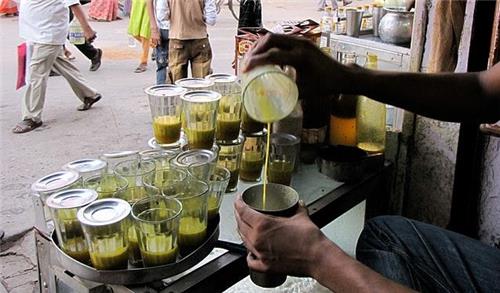
Culled from the leaves and buds of cannabis - the very intoxicating bhang helps to escalate the spirit of holi - a festival which does not recognise any restrictions. Lip smacking thandai, pakoras and vadas, all having bhang as a very essential ingredient, are savoured by all on the day.
Bhang Preparations in BanarasThe tradition of consuming bhang on holi is particularly rampant in North India where holi itself is celebrated with a gusto unseen anywhere else.
But, the hub of bhang is Varanasi or Banaras, the land of Shiva worship, where bhang is prepared on its famous ghats.
Anywhere on the ghats one can find large number of men engaged in the process of preparing bhang. Using mortar and a pestle, the buds and leaves of Cannabis are squashed and ground into a green paste. To this mixture milk, ghee, and spices are added. The bhang base is now ready to be made into a nutritious, refreshing drink - Thandai, a healthy alternative to alcohol. Bhang is also mixed with ghee and sugar to make a tasty green halva, and into peppery, chewy little balls called 'golees'.
A Brief History of BhangBhang was first used as an intoxicant in India around 1000 BC and soon became an integral part of Hindu culture. In the ancient text Artharvaveda, Bhang is described as a beneficial herb that "releases anxiety". Bhang preparations were sacred to Gods, particularly Shiva. One of Shiva's epithets was "Lord of Bhang" as he is said to have discovered the transcendental properties of the mixture.
In imitation of Shiva, many sadhus use Bhang to boost meditation and achieve transcendental states. Besides, Bhang or cannabis is also believed to be popular amongst Sufis as an aid to spiritual ecstasy since a long time.
Bond with the BhangAncient as it is, bhang has become a inseparable part of Indian tradition. So much so that it has become symbolic for a lot of things. They might be, or rather they are, pure superstitious believes. But if one understands the inherent sentimental and emotional nature of Indians, one can very easily feel the emotional bond people have with bhang.
Associated with Lord Shiva, hemp plant is regarded holy by the Hindus. There is even a belief that to meet someone carrying bhang is an omen of success. And, if longing for hemp plant foretells happiness, to see it in dreams ensures prosperity for a person in future. Also, walking underfoot a holy bhang leaf spells doom for a person.
People also strongly believe in the medicinal properties of the hemp plant. If taken in proper quantity bhang cures fever, dysentery and sunstroke. It helps to clear phlegm, quicken digestion, sharpen appetite, cure speak imperfection and lispering. Besides, it freshens the intellect and gives alertness to the body and gaiety to the mind.
What is bhang?Cannabis Rank: Genus
Genus of three closely related species, often hybridized.
Cannabis is dioecious, i.e. individual plants are either male or female. The female plant is the more potent, especially when unpollinated (hence sinsemilla = without seed).
The plant has an ancient relationship with humankind, and has long been cultivated as a source of medicine (the buds), fiber (the stalks), and food (the seeds). It has been found in neolithic Chinese archaeological sites, and is mentioned in the earliest Chinese pharmacopoeias. In India it is associated with Shiva and has played an important role in religious life as a sacred inebriant.
Botanical Suffix: Linnaeus
Habitat: Native to Central Asia, now found worldwide.
Isolated Chemicals: THC Concentration varies greatly by strain.
- 100 Whatsapp Messages for Holi Wishes In English
- 100 Whatsapp Messages for Holi Wishes In Hindi
- History of Holi
- Rituals of Holi
- Significance of Holi
- Tradition of Holi
- Holi Celebration
- Festival of Colours
- Evening of Bonfires
- Holi Pooja Process
- Holi 2025
- Celebrate an Eco Friendly Holi
Significance of Holi
Holi is considered as one of the most celebrated and revered festivals celebrated by the people of Hindu community in India. People in every part of the country and also those living in foreign country celebrate this festival with a...Know More
Holi Related Festivals
Holi is considered as an important festival of India and is celebrated around the country with great zeal and enthusiasm. There are also a great many of Holi related festivals that are celebrated in different states of India.Know More
Copyright © 2005- www.holifestival.org. All Rights Reserved


