 Society for the Confluence of Festivals in India
The Evening of Bonfires
Holika Dahan or the lighting of bonfire takes place on the eve of Holi. The day is also popularly called 'Chhoti Holi' or the 'Small Holi'.The bigger event - play with the colour takes place on the next 'big' day.
Holika Dahan is an extremely popular tradition and is celebrated with fervour all across the country and is symbolic of triumph of good over evil. There are numerous legends associated with this ancient tradition and it is difficult to pin-point as to when actually the tradition started.
A Brief HistoryHolikotsav finds a mention in the Vedas and Puranas. It is stated that during the Vedic period the sacred fire of Holi was burnt amidst the chanting of specific mantras which were intended for the destruction of the demonic forces. It is also said that on this very day Vaishwadev oblation commenced in which offerings of wheat, gram and oat were made to the sacrificial fire.
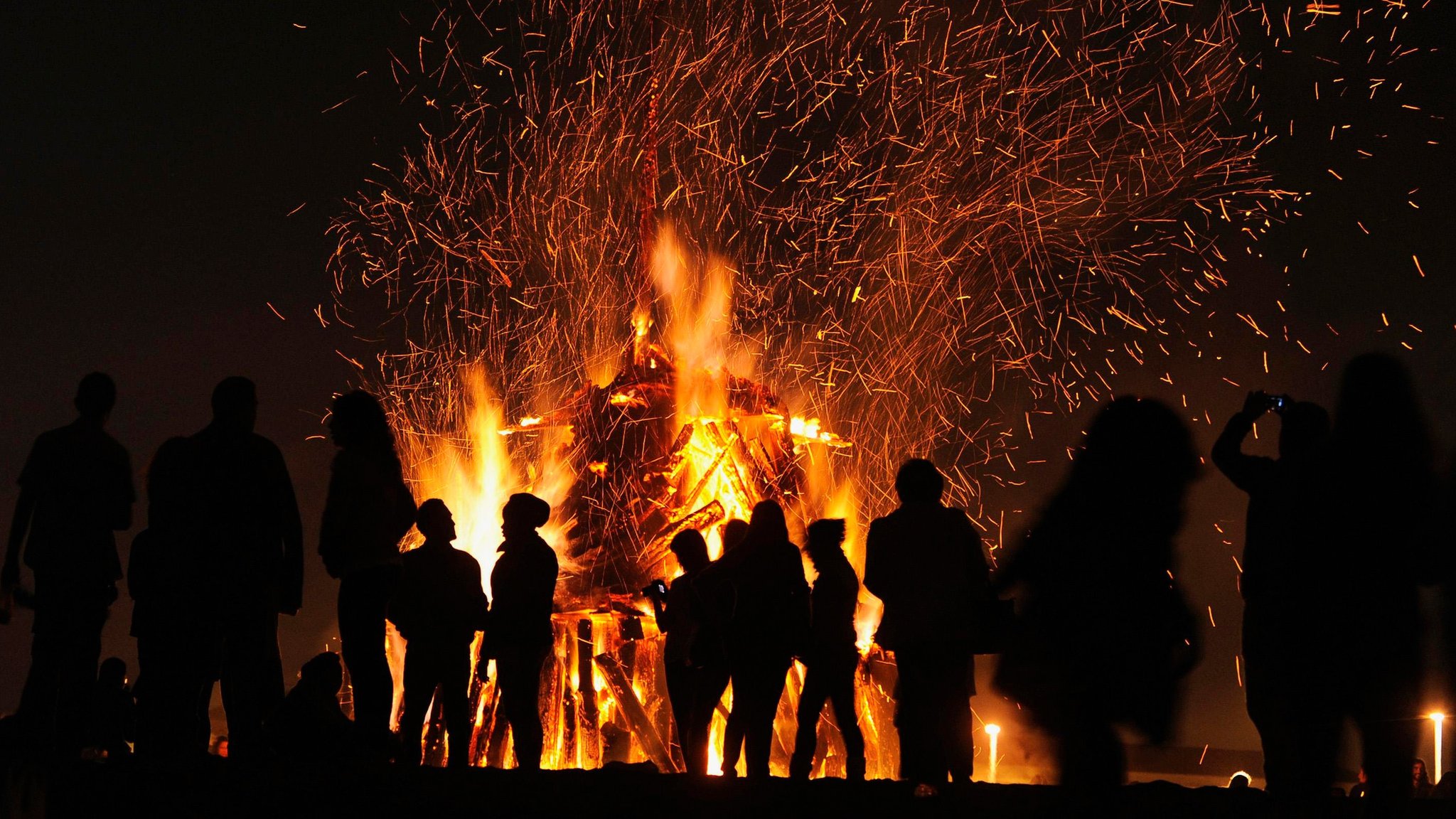
Some scholars believe that Holikotsav is named after fried cereals or parched grains called 'Holka' in Sanskrit. These parched grains were used to perform hawana (a fire ritual).The vibhuti (sacred ashes) obtained from this ritual was smeared on the forehead of those who participated in the ritual to keep away evil. This vibhuti is called Bhumi Hari. Till date there is a tradition of offering wheat and oat into the Holika fire.
According to Narad Purana, this day is celebrated in the memory of Prahlad's victory and the defeat of his aunt 'Holika'. The legend has it that there once existed a mighty demon king by the name of Hiranyakashyap who wished that everybody in his kingdom should worship him. His son, Prahlad became a follower of Lord Naarayana. Hiranyakashyap instructed his sister, Holika to sit in the burning fire with Prahlad in lap. She was blessed with a boon, as a result of which no fire could burn her. But the opposite happened, Prahlad survived and Holika was charred to death. Thus 'holi' is celebrated to commemorate the victory of virtue over evil.
It is because of this event, Holika (a bonfire) is burnt every year on Holi. The burning of the effigy of Holika is called Holika Dahan.
Another legend mentioned in the 'Bhavishya Purana' is also considered to be related to the festival of Holi. The legend goes back to the kingdom of Raghu, where lived an ogress called Dhundhi who used to trouble children but was finally chased away by them on the day of Holi. This is said to be the reason why the tradition of Holika Dahan is so popular amongst children and why they are allowed to play pranks on the day.
The Tradition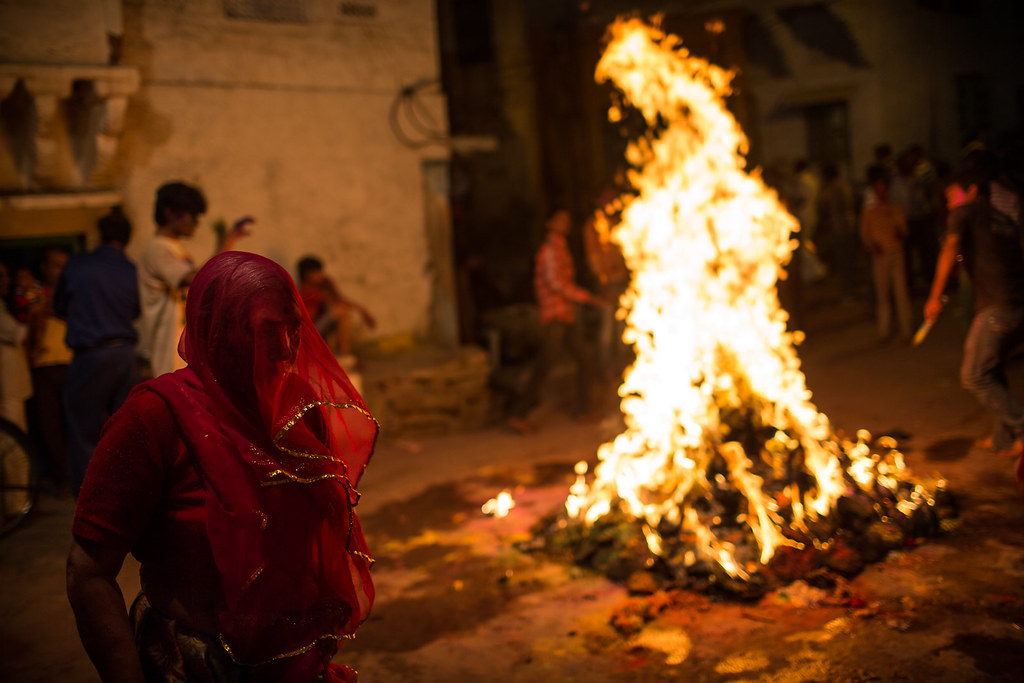
There is also a specific way in which Holika Dahan takes place. A log of wood is kept in a prominent public place on the Vasant Panchami day, almost 40 days before the Holi Festival. People go on throwing twigs, dried leaves, branches of trees left through the winter besides any other combustible material they can spare, on to that log which gradually grows into a sizable heap. On the day of Holika Dahan an effigy of Holika with child Prahlad in her lap is kept on the logs. Usually, Holika's effigy is made of combustible materials, whereas, Prahlad's effigy is made of non-combustible one. On the night of Phalguna Purnima, it is set alight amidst the chanting of Rakshoghna Mantras of the Rig Veda (4.4.1-15; 10.87.1-25 and so on) to ward off all evil spirits.
Next morning the ashes from the bonfire are collected as prasad and smeared on the limbs of the body. If spared by the fire coconuts are also collected and eaten.
Metaphorically though, the fire is meant to signify the destruction of evil - the burning of the 'Holika' - a mythological character and the triumph of good as symbolised by Prahlad. However, the heat from the fire also depicts that winter is behind and the hot summer days are ahead.
Next day after Holika Dahan is called Dhuleti, when play with colours actually takes place.
It may be noted that in some places like Bihar and UP Holika Dahan is also known as 'Samvatsar Dahan'. The concept of Samvatsar New Year varies in different provinces of our country. In some provinces the month commences from 'Krishna Paksha' while in others it commences from 'Shukla Paksha'. For Krishna Paksha, the year ends on 'Purnima' of the month of Phalgun and thus the new year begins the next day - Chaitra, first day of the Krishna Paksha.
- 100 Whatsapp Messages for Holi Wishes In English
- 100 Whatsapp Messages for Holi Wishes In Hindi
- History of Holi
- Rituals of Holi
- Significance of Holi
- Tradition of Holi
- Holi Celebration
- Festival of Colours
- Evening of Bonfires
- Holi Pooja Process
- Holi 2025
- Celebrate an Eco Friendly Holi
Significance of Holi
Holi is considered as one of the most celebrated and revered festivals celebrated by the people of Hindu community in India. People in every part of the country and also those living in foreign country celebrate this festival with a...Know More
Holi Related Festivals
Holi is considered as an important festival of India and is celebrated around the country with great zeal and enthusiasm. There are also a great many of Holi related festivals that are celebrated in different states of India.Know More
Copyright © 2005- www.holifestival.org. All Rights Reserved


